
FOR BMI 30+ · FIRST-TIME SURGERY PATIENTS
E-Lipo high-BMI liposuction — Your questions, answered by E-Lipo Your Questions, Answered by E-Lipo.
Is anesthesia risky? Can it be done in one session? Will the fat come back?
For every real question from high-BMI patients, E-Lipo has a distinct answer.
REAL Q&A
Real Questions from High-BMI Patients,
Answered by E-Lipo
These are the most frequently asked questions from online forums and communities. Each answer explains why E-Lipo offers a different approach.
Is liposuction effective at my weight? How much weight will I lose?
Liposuction is a silhouette-improvement procedure, not weight-loss surgery. It changes the shape and contour of your abdomen, flanks, and thighs rather than the number on the scale. The goal is to directly remove fat cells from stubborn areas that resist diet and exercise.
In high-BMI patients, fat tissue often becomes fibrotic, leading to uneven results with standard suction techniques. Uniform removal is essential for visible silhouette changes.
Decoupled Separation-Suction — Fat is thoroughly loosened with PAL first, then suctioned separately. Even fibrotic high-BMI fat is removed uniformly for smooth contours.
Dual-PAL Technique — Eliminates surgeon fatigue, maintaining precision from start to finish.
Can I have surgery at my current weight, or should I lose weight first?
We do not determine eligibility based on BMI alone. If subcutaneous fat is predominant, surgery is often possible at your current weight. If visceral fat ratio is high, some weight loss beforehand typically yields better results.
One reason many clinics say "lose weight first" is simply that they lack a protocol to handle fibrotic fat.
PAL (MicroAire) + NIL (Lipomatic) dual energy — effectively separates fibrotic high-BMI fat.
Curved Basket Cannula — enables even fat separation in complex anatomical structures, expanding the range of eligible cases.
Will my skin sag badly after large-volume liposuction?
We are upfront with you. If skin elasticity is insufficient, some sagging may occur. This is a reality regardless of which clinic performs the procedure.
Suction methods that protect blood vessels and dermis promote natural skin retraction. In cases with significantly diminished elasticity, we honestly recommend combining the procedure with a skin-tightening lift.
Decoupled Technique — preserving the dermal layer is key to promoting skin retraction. Tissue structure remains more intact than with aggressive single-pass suction.
5,000cc / 7% Body Weight Per Session — staged design reduces the risk of skin sagging.
I'm worried about anesthesia. Can high-BMI patients get sedation anesthesia?
E-Lipo is performed under sedation anesthesia. By significantly reducing procedure time, E-Lipo creates the conditions for sedation to be safe even for high-BMI patients.
The most direct way to reduce anesthetic burden is shortening the procedure time. Less time under sedation means faster recovery and fewer side effects.
Performed Under Sedation — made possible because the dual energy system significantly shortens procedure time.
PAL + NIL Dual Energy — processes the same volume significantly faster. Faster recovery and same-day discharge.
Dual-PAL Technique — prevents surgeon fatigue, so sedation time is never unnecessarily extended.
Can I get full-body liposuction in one go? How many visits do I need?
If another clinic told you the upper body alone requires 2-3 sessions, that reflects a limitation in their protocol.
E-Lipo can technically handle large volumes in a single session. Yet we split full-body work into 2 sessions not because we can't do more — but because it delivers better safety and results.
Upper Body in 1 Session + Lower Body in 1 Session — while other clinics take 3 sessions for just the upper body, E-Lipo completes it in one.
5,000cc / 7% Body Weight Limit is not a technical limitation but a design principle — the conclusion of 25 years of clinical experience.
Can I have surgery if I have diabetes or hypertension?
Having underlying conditions does not automatically disqualify you. Controlled diabetes and hypertension can often proceed after internal medicine and anesthesiology evaluation. However, uncontrolled conditions, heart disease, or sleep apnea require stabilization first.
We do not sugarcoat or evade the truth. If a case is not suitable, we say so directly.
Shorter Procedure → Less Anesthetic Burden — expands the safety margin for patients with underlying conditions.
Per-Session Volume Design — prevents blood pressure fluctuations and fluid overload in patients with diabetes and hypertension.
I've heard complications like fat embolism and blood clots are much riskier for obese patients.
That is true. High-BMI patients do face higher risks of fat embolism, blood clots, bleeding, and infection. The role of a proper protocol is not to ignore these risks, but to minimize them.
Three ways to reduce risk: minimize vascular damage, shorten procedure time, and adhere to safe per-session volume limits.
Decoupled Technique — structurally minimizes vascular rupture.
Reduced Procedure Time — Thrombus formation is proportional to immobility time. A shorter procedure directly lowers the risk of pulmonary embolism.
5,000cc / 7% Volume Standard — a safety design to prevent fluid imbalance, hypothermia, and hypotension.
When can I return to work? How much swelling and pain should I expect?
Recovery from high-BMI, large-volume liposuction takes a bit longer than standard cases. We are honest about what to expect.
Day of surgery: go home 2-3 hours after the procedure. Days 3-5: peak discomfort period. Days 7-10: desk work possible. 1 month: 50-60% swelling reduction. Hardness gradually resolves over 3-6 months.
Minimized Tissue Trauma — the decoupled technique reduces initial swelling and pain, making early recovery relatively more comfortable.
Same-Day Discharge — Fewer post-anesthesia side effects from shorter surgery mean less time in the recovery room.
Will I regain weight after liposuction? I'm worried about rebound.
Removed fat cells do not regenerate. However, remaining fat cells can still enlarge. What matters is how the suction was performed.
If fat was removed unevenly, weight gain can cause remaining areas to enlarge asymmetrically, worsening results.
Uniform Suction = Uniform Remaining Cells — reduces the risk of asymmetry.
SAFELipo-Based Structure Preservation — supports long-term skin contour maintenance.
Bariatric surgery vs. liposuction — which one is right for me?
The two have fundamentally different goals. Bariatric surgery aims to significantly reduce overall body weight, while liposuction targets localized body contouring.
Some cases combine both. The strategy: reduce weight through bariatric surgery first, then refine remaining body contour imbalances with E-Lipo.
Post-Bariatric Body Contouring — we clearly distinguish the role of each procedure in our approach.
Honest Candidacy Assessment — for cases with high visceral fat, we recommend weight loss before E-Lipo. We never push patients toward surgery.
SURGERY PLAN
Other Clinics: 3–4 Sessions vs.
E-Lipo: 2 Sessions to Completion
The difference in session count is not about equipment — it is about the protocol.
| Standard Liposuction | E-Lipo (Laprin) | |
|---|---|---|
| Session 1 | Upper abdomen only — long duration Lower abdomen in next session |
Full abdomen + flanks completed Shortened with PAL+NIL · Same-day discharge |
| Session 2 | Lower abdomen & flanks Lower body not yet started |
Thighs & buttocks completed Full body done ✓ |
| Session 3+ | Lower body etc. additional Hospitalization may occur |
— Not needed — |
PROTOCOL
The 3 Core Technologies
Behind E-Lipo
DUAL ENERGY
PAL + NIL Dual Energy
Combines MicroAire PAL mechanical vibration with Lipomatic NIL natural oscillation. Even fibrotic high-BMI fat is rapidly separated and processed, reducing procedure time.
DECOUPLED
Decoupled Separation-Suction
Separation (PAL/NIL) and suction are performed in sequence. Protects blood vessels and dermis while ensuring uniform removal. Skin sag prevention, reduced fat embolism risk, and even results — all stem from this technique.
DUAL-PAL
Surgeon Fatigue Prevention
Alternating both hands prevents Hand-Arm Vibration Syndrome (HAVS). Precision remains consistent from the first cc to the last in large-volume procedures.
RECOVERY
Recovery Timeline,
The E-Lipo Standard
The decoupled technique, which minimizes tissue trauma, makes early recovery relatively more comfortable.
DAY OF SURGERY
Same-Day Discharge After 2-3 Hours in Recovery
Thanks to the shorter procedure time, you wake up faster from sedation. Fewer anesthetic side effects mean a shorter recovery room stay.
WITHIN 1 WEEK
Peak Swelling & Discomfort — Compression Garment Period
Days 3-5 are the most uncomfortable. The decoupled technique results in relatively less initial pain. Desk workers can typically return to work around days 7-10.
1 MONTH
50-60% Swelling Reduction, Contours Begin to Show
Light cardio can resume. The SAFELipo-based approach preserves support structures, allowing uniform skin retraction.
3-6 MONTHS
Final Results
The more uniformly the tissue was suctioned, the more predictable your final results will be. Your diet and exercise during this period determine long-term outcomes.
CANDIDACY
Surgical Eligibility,
How We Determine It
We do not say yes to everyone. We do not say no to everyone either.
Predominantly Subcutaneous Fat — Often Eligible Right Away
Because PAL+NIL dual energy handles fibrotic fat, the range of cases eligible at current weight is broader.
Controlled Underlying Conditions — Eligible After Evaluation
E-Lipo's shorter procedure time expands the safety margin for patients with underlying conditions. Performed after internal medicine + anesthesiology consultation.
Excess Visceral Fat — Weight Loss or Bariatric Surgery Recommended First
Visceral fat cannot be removed through liposuction. We never push patients toward surgery.
Uncontrolled Conditions or Heart Disease — Stabilization Required First
We do not hide or sugarcoat this assessment.
WHY LAPRIN
E-Lipo Is
Laprin's Exclusive Protocol
E-Lipo is not a device brand. Even with the same equipment, how it is used determines the outcome.
Liposuction Experience
Chief surgeon performs all procedures
E-Lipo Protocol
Clinically developed & continuously refined
Full Body Completion
What takes others 3-4 sessions
E-Lipo Academy
Training in Japan, USA & Southeast Asia
Specialized Pages
Specialized Treatment Pages
Explore detailed procedures, comparison analyses, and recovery information for each body area
on our specialized treatment pages.

Abdominal Liposuction
Body Tantan Program
Full 360° abdomen & waist E-Lipo for a toned abdominal contour from every angle.
View Details
Upper Arm Liposuction
Slim Arm Program
Stubborn upper arm fat that makes sleeveless tops uncomfortable — refined with FSN-preserving Slim Arm E-Lipo.
View Details
Facial Liposuction
Power V Lifting Program
A face that looks larger due to fat — Power V Lifting refines the contour while preserving bone structure.
View Details
Quick Abdominoplasty
Quick Abdominoplasty Program
Surgery for sagging lower abdomen that diet and liposuction alone cannot resolve.
View DetailsSTORIES
Laprin E-Lipo Blog — Stories from the Clinic
Explore Laprin's philosophy and technology in depth.
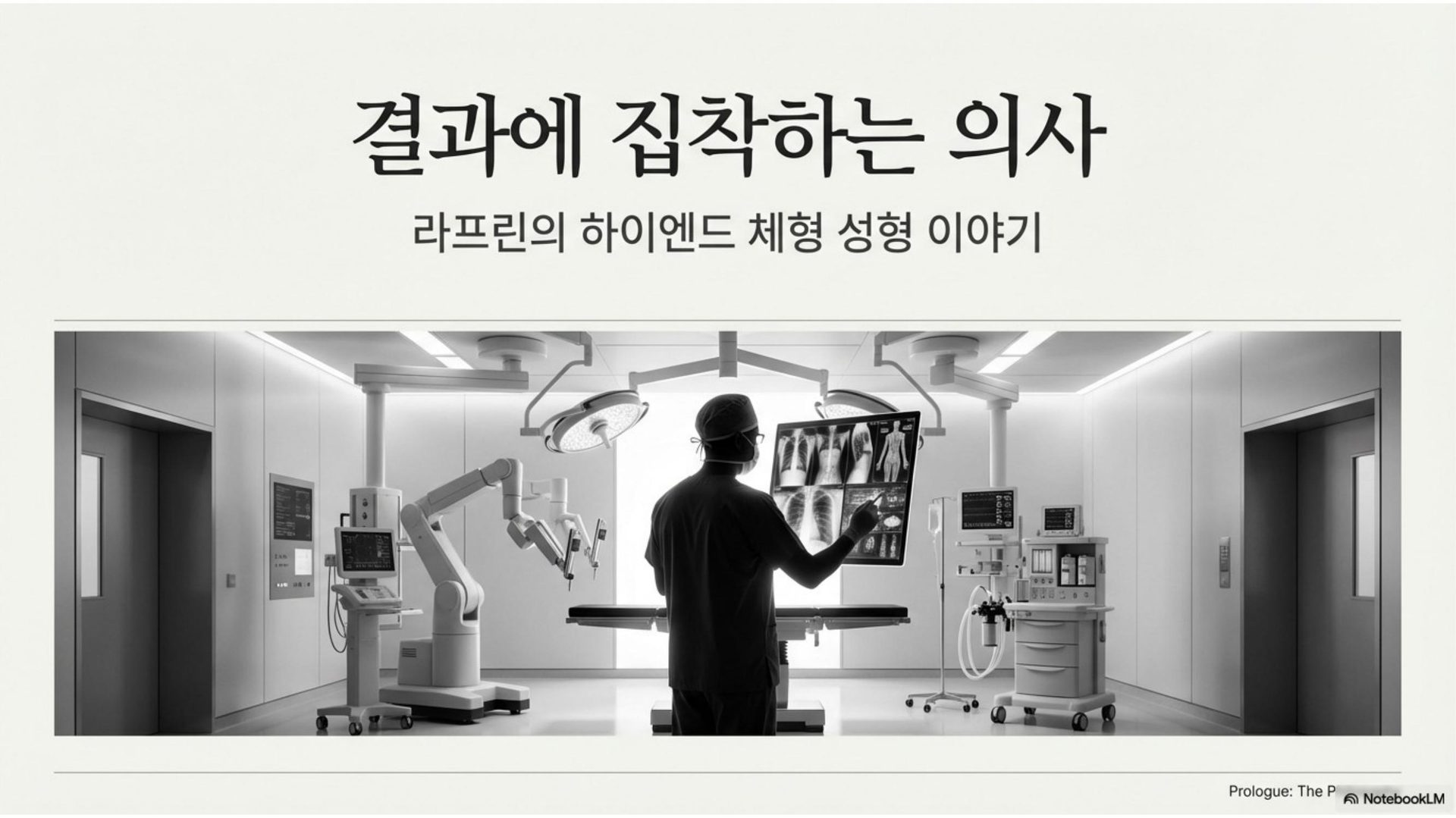
A Doctor Obsessed with Results
Laprin's philosophy of integrating 4 devices — VASER, MicroAire, Renuvion, Lipomatic — into one E-Lipo system.
Read More
Does Removing More Fat Cause Unevenness?
The truth about surface smoothness in liposuction. Results are determined by technique and system, not volume.
Read More
High-volume liposuction,
same-day discharge.
E-Lipo's systematic protocol enables safe high-volume fat removal
even for higher BMI patients, with same-day return home.
We don't judge by BMI alone—we review fat distribution, health status, and your goals,
and explain clearly what is possible and how we would proceed.
Where we say it's feasible, we stand behind the outcome.
No pressure to decide after your consultation. Take your time.
Mon–Sat 10:00 – 19:00 (Closed Sun & Holidays)